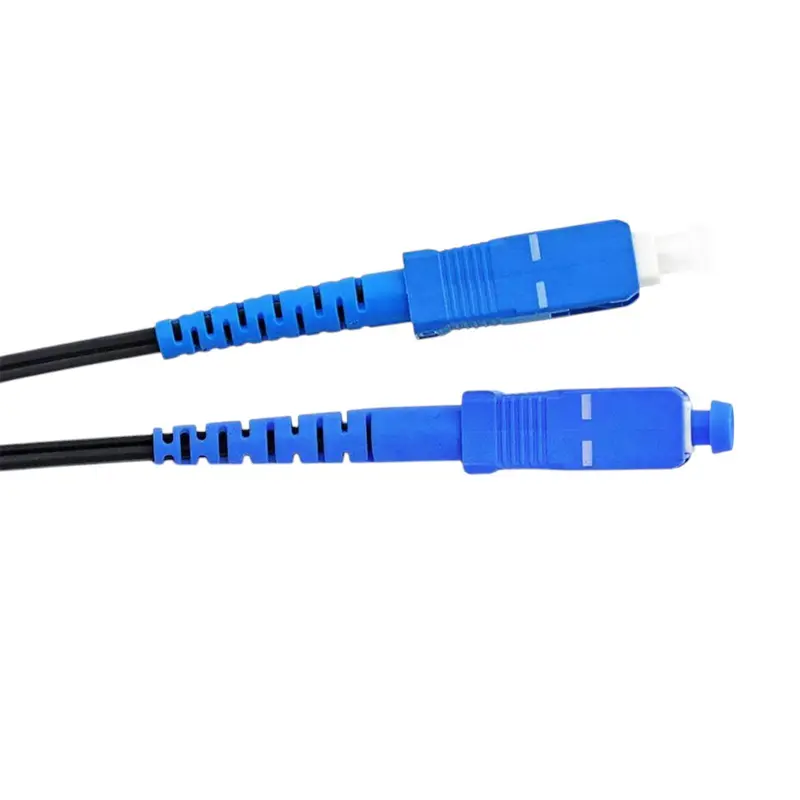
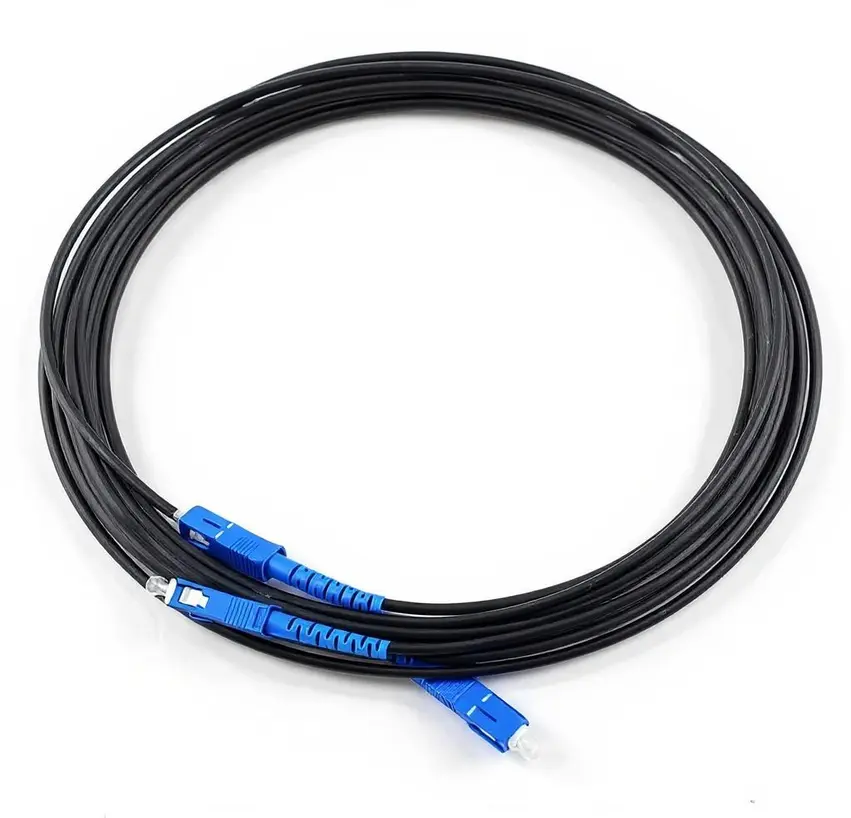
Fiber optic cable assemblies are complete units consisting of glass or plastic optical fibers, connectors, protective jackets, and optional reinforcement designed to transmit data as light signals across systems and industries.
Key Benefits:
- Exceptional bandwidth & speed: Capable of ultra-high transfer rates and low latency, ideal for applications like 10G/40G/100G+ networking.
- Immunity to EMI/RFI: Glare-proof data transmission in electrically noisy environments such as industrial or telecom installations.
- Minimal signal loss and extended range: Enables long-reach communication without repeaters.
Lightweight and compact: Easier routing and deployment compared to copper cabling, optimal for high-density or space-constrained environments.
Typical Configurations:
- Single-mode & Multimode fibers (e.g. ITU-T G.652, G.657 standards)
- Connector variants including LC, SC, ST, FC, MTP/MPO, push-pull types
- Polishing options: UPC, APC, or enhanced low-return-loss finishes.
- Cable styles: patch cords, trunks, fan-out, mechanically spliced, ribbon, or breakout designs.
Applications:
- Telecom & Internet backbone: High-speed data, voice, and video across networks and service providers.
- Data centers: Server-to-switch, switch-to-switch, and storage interconnects; includes high-density MPO/MTP trunk cables supporting hundreds of fibers.
- Medical & imaging devices: Used in diagnostic and therapeutic instruments like endoscopes and confocal systems.
- Military, aerospace & harsh environments: Ruggedized assemblies meeting MIL�STD specs for shock, vibration, and environmental sealing.
- Industrial automation & IoT systems: Robust communication in robotic, facility control, and smart building infrastructure.